Paris Aesthetic: 10 Beautiful Streets and Scenes to Experience
The Paris aesthetic is more than a picture of the Eiffel Tower. It is the curve of a quiet Montmartre lane, patterned floors beneath a covered passage, a garden chair beside a pale gravel path, and the changing light across the Seine. The best way to experience these Paris vibes is to notice how the city’s ordinary spaces fit together. This guide brings together ten distinctly different streets and scenes—from intimate neighborhood corners to formal architecture—with practical suggestions for seeing them in person. Instead of chasing a perfectly empty photograph, use these stops as invitations to explore a real, working city at a comfortable pace.
10 places to experience the Paris aesthetic
1. Rue de l’Abreuvoir, Montmartre
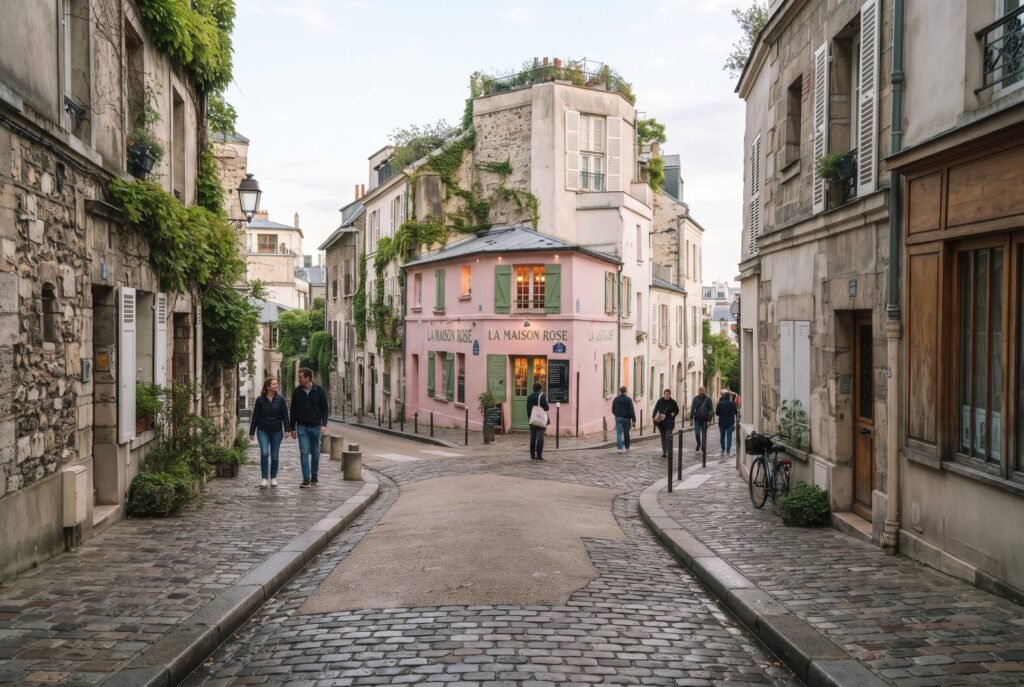
There is a particular Paris mood that comes from a street bending just enough to conceal what lies ahead. Rue de l’Abreuvoir offers that in Montmartre, where a short walk can feel far removed from the broad boulevards below. Its façades, climbing perspective, and recognizable pink building create a scene worth enjoying even when the sky is gray.
Come for the street itself rather than one perfect snapshot. Walk slowly, notice how the rooftops sit at different heights, and look back down the slope before moving on. Early in the day can provide a calmer setting, though an empty street is never guaranteed. The lanes are narrow and residential; keep doorways clear, avoid blocking local movement, and photograph cafés respectfully.
Pair this stop with nearby lanes and the Sacré-Cœur area, but allow time to wander. Steep streets and uneven paving make comfortable shoes especially useful. For a longer walk through the neighborhood, see our Montmartre Paris guide.
Location: Rue de l’Abreuvoir near Rue des Saules, Montmartre.
Google Maps: View Rue de l’Abreuvoir, Montmartre on Google Maps
Official website: Paris je t’aime — Montmartre filming-location walk
2. Place des Vosges

Paris is often pictured as a series of winding streets, but Place des Vosges delivers its beauty through repetition and balance. Brick façades, pale stone, and continuous arches surround a garden that encourages a slower kind of visit. The square is part of the Marais, yet its enclosed proportions give it a distinct character.
Walk beneath the arcades first to appreciate the rhythm of the arches and the view into the central space. Then cross the garden to see how the buildings line up from different corners. On a bright day, the contrast between shaded passages and sunlit brick adds depth; in subdued weather, the architecture itself becomes the subject. This is an excellent stop for travelers who prefer thoughtful urban details over elaborate viewpoints.
The surrounding Marais streets make this an easy starting point for a wider neighborhood walk. The square is a shared public space, not a photography set; stay considerate around benches, residents, and other visitors.
Location: Place des Vosges, 75004 Paris.
Google Maps: View Place des Vosges on Google Maps
Official website: Paris je t’aime — Place des Vosges
3. Galerie Vivienne
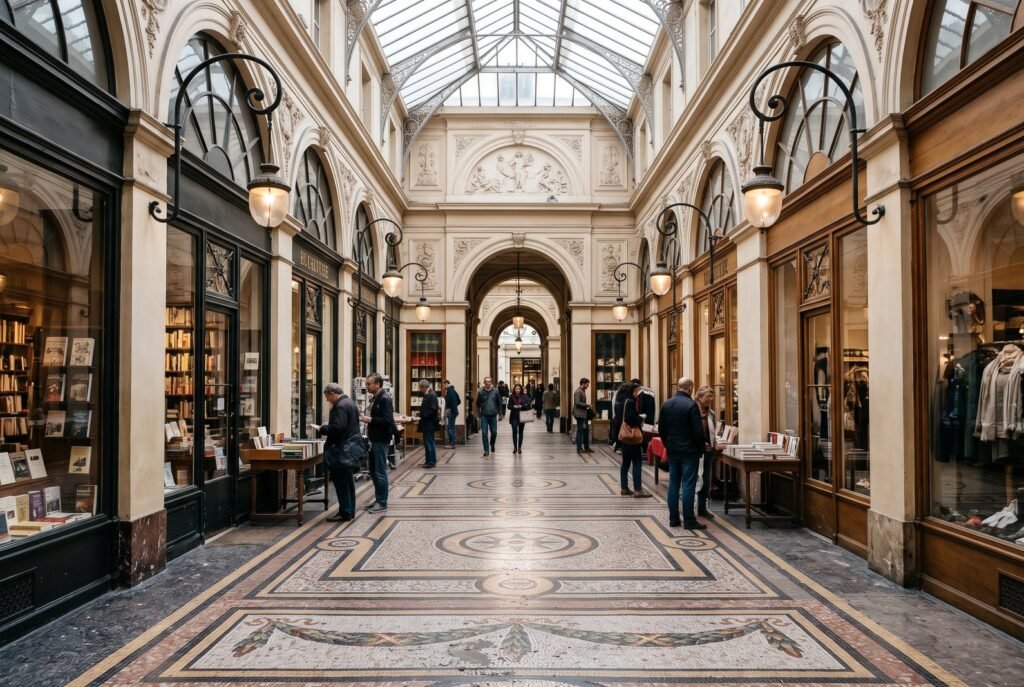
For a Paris aesthetic that feels intimate rather than monumental, step into Galerie Vivienne. This covered arcade changes the pace of the city: the light softens beneath its glass roof, mosaic patterns guide your eye along the floor, and the storefronts create a layered interior scene.
Rather than rushing through to take one photograph, notice how the gallery shifts from one perspective to another. Look for repeated columns, decorative arches, and the way reflections appear in the windows. The space is particularly appealing when outdoor weather makes an indoor stroll attractive. Because shops operate here, respect customers and any photography restrictions displayed by individual businesses.
Galerie Vivienne is practical to combine with Palais-Royal on a central Paris day. Its appeal lies in the built details, so even a short visit can be satisfying without making a purchase.
Location: Entrances at 4 Rue des Petits Champs; 6 Rue Vivienne; 5–7 Rue de la Banque.
Google Maps: View Galerie Vivienne on Google Maps
Official website: City of Paris — Covered passages
4. Palais-Royal Gardens and Buren’s Columns
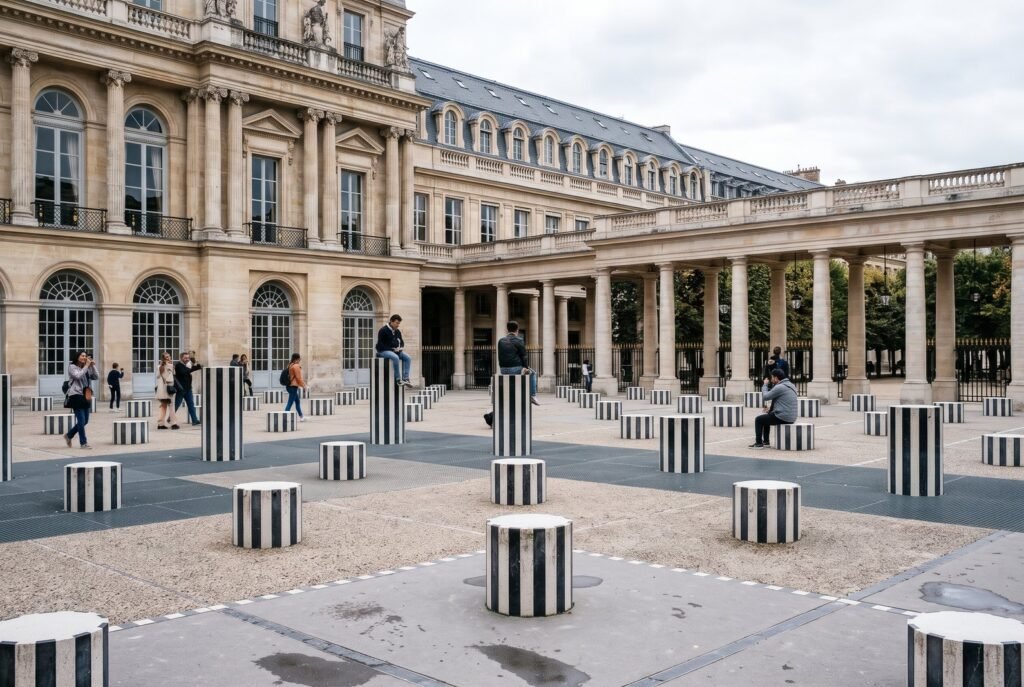
Palais-Royal is a study in contrasting kinds of beauty. In one direction are garden paths, trees, and classical façades; in another are Daniel Buren’s black-and-white striped columns. Together they make this an unusually versatile stop for people drawn to Parisian architecture and design.
Start with the courtyard for the geometry of the columns, then move into the garden to observe the quieter symmetrical setting. Close views emphasize texture and repeating lines, while a wider frame gives necessary architectural context. The garden changes noticeably with the seasons, so approach it as a living public space rather than expecting a single fixed look.
This is one of the easier stops to fold into a day centered on the Louvre area. Check current garden access information before visiting, particularly around maintenance, closures, or public events.
Location: Place Colette, 75001 Paris.
Google Maps: View Palais-Royal Gardens and Buren’s Columns on Google Maps
Official website: Paris je t’aime — Palais-Royal
5. Passage des Panoramas

Where Galerie Vivienne feels polished, Passage des Panoramas offers a denser and more lived-in visual rhythm. The covered corridor, shop windows, and compact spaces create an experience shaped by the passage’s history as a commercial thoroughfare. It is a useful reminder that the Paris aesthetic is not limited to grand monuments.
Explore at walking speed and give yourself permission to look into the depth of the passage rather than only at its entrance. The most rewarding scenes often come from a convergence of floor pattern, lighting, and storefront proportions. Some areas are narrow, so step aside before stopping for a picture. If you choose to enter a shop or restaurant, follow its own photography policy.
Pair it with Galerie Vivienne for a comparison of two covered passages that feel visually different despite their proximity in central Paris.
Location: 11–13 Boulevard Montmartre or 38 Rue Vivienne.
Google Maps: View Passage des Panoramas on Google Maps
Official website: City of Paris — Covered passages
6. Jardins du Trocadéro
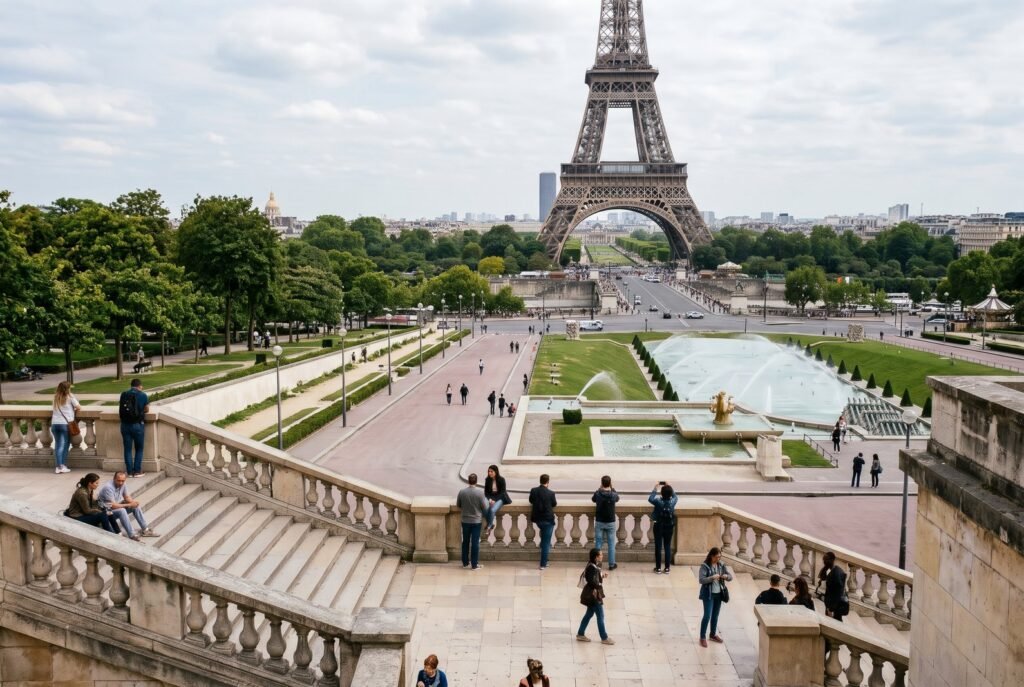
The Eiffel Tower is the familiar image, but the Trocadéro landscape gives it a sense of theater. From the gardens and nearby esplanade, the tower becomes the focal point of a broad urban composition, framed by paths, water features, architecture, and the open sky.
Spend time studying the view from different public points instead of competing for one crowded foreground. A broad frame gives the tower room to breathe; a closer composition can make interesting use of steps, planting, and architectural edges. The atmosphere changes between bright afternoons and softer evening light, but crowd levels and temporary works may affect the experience.
The gardens sit across the Seine from the tower. Visit as part of a walk through the wider Eiffel Tower district rather than assuming a quick photo is the only reason to come. Check for temporary access restrictions before travel.
Location: Place du Trocadéro, 75016 Paris.
Google Maps: View Jardins du Trocadéro on Google Maps
Official website: Paris je t’aime — Jardins du Trocadéro
7. Pont Alexandre III

Pont Alexandre III offers a more elaborate side of Paris than the understated residential lanes. Ornate lamps and gilded sculptures stand above a broad bridge, while the Seine provides an open, shifting background. The beauty here is in the craftsmanship as much as the panorama.
Walk across both sides and notice how the decorative details change against the sky. A close composition can highlight the sculpted metalwork; looking along the bridge reveals the perspective of its lamps and balustrades. For a less conventional image, frame a small detail against the river rather than trying to include everything at once. Use care around cyclists and other people crossing.
The bridge connects the Invalides side with the area around the Grand Palais and Petit Palais. It is especially suited to a larger riverside stroll and can be appreciated without reserving an attraction ticket.
Location: Cours la Reine / Quai d’Orsay, Paris.
Google Maps: View Pont Alexandre III on Google Maps
Official website: Paris je t’aime — Pont Alexandre III
8. Square du Vert-Galant

Not every memorable Paris scene has a dramatic façade. At Square du Vert-Galant, the impression comes from being close to the water at the western point of Île de la Cité. Trees, passing boats, and the surrounding embankments give this small public space a relaxed riverside character.
Choose a place to sit and watch the scene change. The slow movement of a boat or the reflection of a bridge can make the river feel more expressive than a static landmark view. Keep in mind that a low riverside location may have changing conditions, particularly after wet weather or when water levels are high. Do not approach closed or restricted embankment areas for a photograph.
Access the square from the Pont-Neuf area. It works best as an unhurried pause while exploring central Paris on foot, rather than a destination with a lengthy checklist of activities.
Location: Place du Pont-Neuf, 75001 Paris.
Google Maps: View Square du Vert-Galant on Google Maps
Official website: Paris je t’aime — Square du Vert-Galant
9. Jardin du Luxembourg
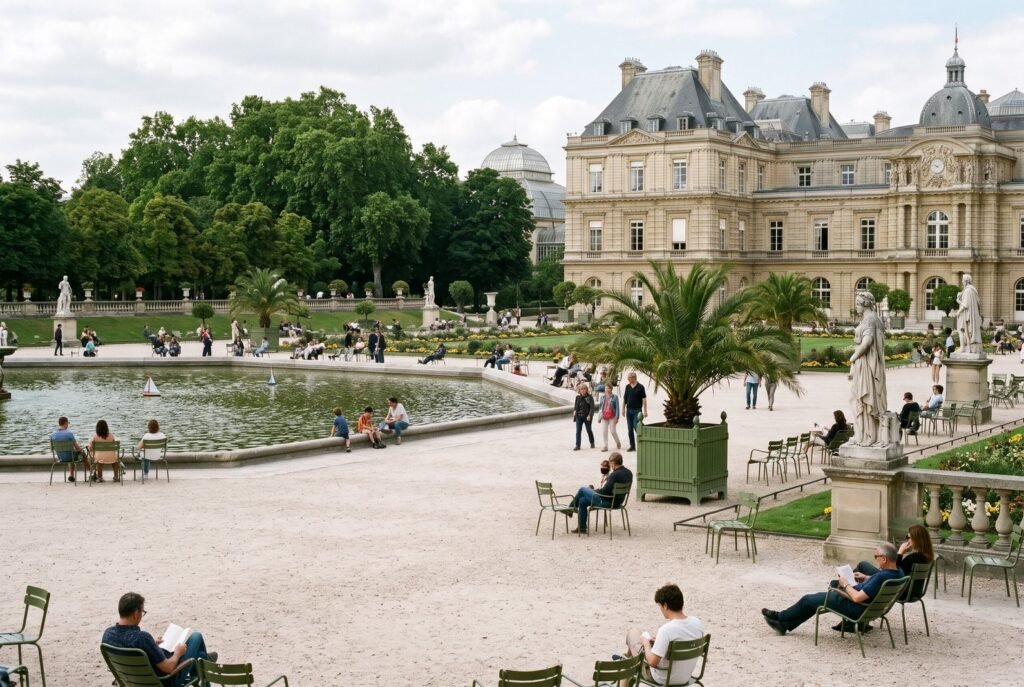
A different Paris mood emerges in the Luxembourg Gardens: people reading on chairs, gravel paths beneath trees, and the gentle geometry of the ornamental basin. This setting captures everyday public life as readily as it captures architecture.
Allow time to sit rather than treating the gardens as a corridor between sights. Look for the small visual relationships that give the place character, such as green chairs against pale gravel or the alignment of tree-lined paths. The appearance shifts with weather and seasons, and that variation is part of the attraction. For photography, favor wider scene-setting frames over close pictures of strangers without permission.
The gardens are well placed for a walk around the Left Bank. Gate access can be seasonal, so confirm current opening information rather than assuming the park is accessible at every hour.
Location: Jardin du Luxembourg, 75006 Paris.
Google Maps: View Jardin du Luxembourg on Google Maps
Official website: Paris je t’aime — Gardens of Paris
10. The Seine near Pont des Arts
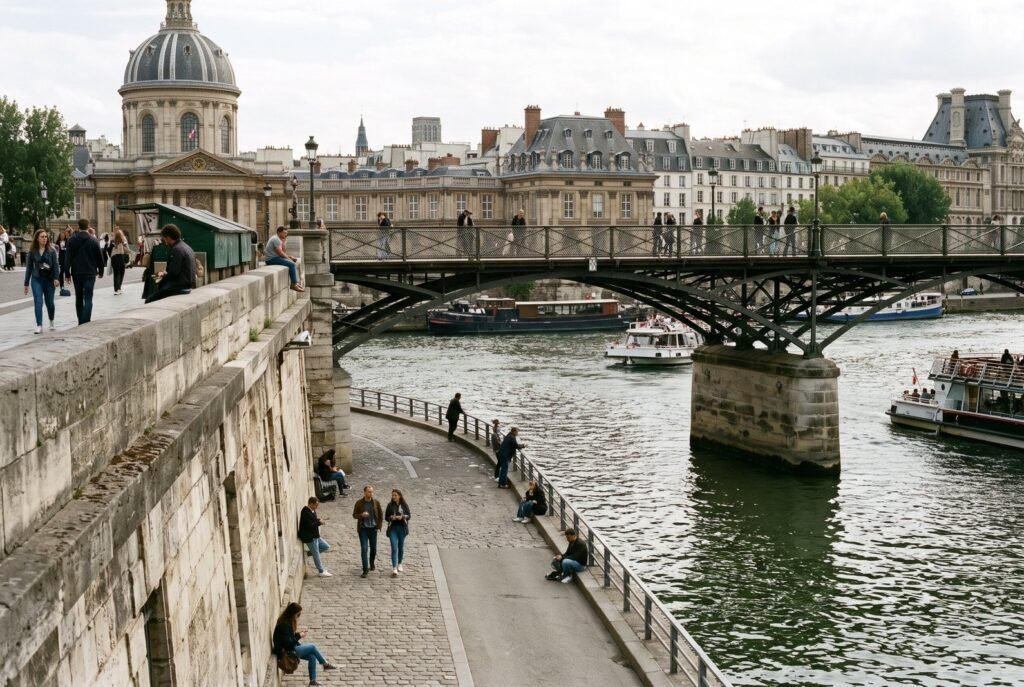
The river is one of the simplest ways to understand why the Paris aesthetic feels so cohesive. Around Pont des Arts, layers of stone embankments, historic buildings, and passing boats create a scene that is unmistakably urban but still open to the sky.
Rather than searching for an exact viral camera angle, explore the public quays and find a view that lets the river guide the composition. The textures of old stone, the line of the bridge, and movement on the water can each become the focus. Late-day light may bring out warm surfaces, while cloudier skies produce a subtler palette. Conditions by the water can be windy or damp, and paths may be restricted during high water.
This is a fitting final stop for a central Paris wandering day. It makes space for the quiet, observational side of travel photography and requires little more than attention to the surroundings.
Location: Pont des Arts, Quai de Conti / Quai François Mitterrand.
Google Maps: View The Seine near Pont des Arts on Google Maps
Official website: Paris je t’aime — Seine bridges
How to plan a beautiful Paris streets day
Choose a neighborhood cluster rather than attempting all ten stops in one outing. The Galerie Vivienne, Passage des Panoramas, and Palais-Royal make a coherent central Paris grouping; Place des Vosges fits naturally into a Marais walk. Montmartre deserves its own slower stretch of time, especially if you want to enjoy its slopes without racing between viewpoints. The river scenes around Pont des Arts and Square du Vert-Galant can be combined with other central sights, while Trocadéro and Pont Alexandre III belong to a more expansive westward day.
Aim for different kinds of light instead of an invented ideal time for every location. Overcast weather can emphasize stone and architectural lines; brighter conditions draw out contrasts between sun and shadow. Keep walkways clear, respect residents and shops, and check individual venues for current access. Comfortable shoes, weather-appropriate layers, and a flexible route will contribute more to the experience than an exhaustive photography checklist.
Final Thoughts on Experiencing the Paris Aesthetic
A memorable Paris aesthetic travel day isn’t about capturing ten flawless photographs or rushing between famous landmarks. It’s about slowing down and appreciating the details that give the city its unmistakable charm. From the winding streets of Montmartre and the elegant arcades of Galerie Vivienne to the peaceful gardens and historic bridges along the Seine, each location reveals a different side of Parisian life.
Rather than trying to visit every beautiful spot in one day, choose a few places that genuinely interest you and allow time to explore beyond the obvious viewpoints. Wander through surrounding streets, pause at a neighborhood café, or simply enjoy the changing light across the city’s architecture. Some of the most memorable moments happen unexpectedly, away from carefully planned photo stops.
Ultimately, experiencing the Paris aesthetic is as much about atmosphere as it is about beautiful surroundings. Whether you’re drawn to romantic streets, architectural details, or quiet riverside scenes, leave room for spontaneous discoveries. Often, it’s these ordinary moments that make Paris feel truly special.
FAQs
Where can I find aesthetic streets in Paris?
Start with Rue de l’Abreuvoir for a village-like Montmartre lane, then explore the Marais around Place des Vosges for formal squares and surrounding streets. Both offer different kinds of Parisian character.
Are these Paris aesthetic places free to see?
Many are public streets, bridges, squares, and gardens, with no attraction ticket required to enjoy their exterior views. Covered passages contain individual businesses, and access can vary; check official information before going.
What is the best weather for Paris travel photography?
Soft cloud cover can make façades easier to photograph without harsh contrast, while clear weather can add depth to river and garden views. Choose conditions that suit the scene and your comfort rather than relying on a single perfect forecast.
Can I visit every location in one day?
The places span several neighborhoods. A more enjoyable approach is to group nearby stops and allow additional time for Montmartre and the Eiffel Tower area instead of rushing across the city.