West Village NYC Walking Guide: Charming Streets and Stops
The best way to experience West Village NYC is on foot, with no pressure to see everything. South of the big avenues and west of the busier Washington Square area, the streets slip out of Manhattan’s familiar grid. Brick townhouses line unexpectedly angled blocks; a quiet residential corner can give way to a crowded café in moments. This self-guided walk connects the neighborhood’s most rewarding streets with an independent bookstore, an important civil-rights landmark, and an easy waterfront finish.
You can follow the stops in order or linger wherever the neighborhood draws you in. The main route is about the streets themselves—not a race through famous television locations or an expensive restaurant checklist. A handful of optional food, book, and garden stops makes the walk flexible for a first trip, a return visit, or a camera-in-hand afternoon. If this is your first time in the city, the larger New York sights can fit around a slower neighborhood day like this one.
West Village walking route at a glance
Start: Jefferson Market Library at Sixth Avenue and West 10th Street. Continue to Three Lives & Company, Christopher Park and the Stonewall area, Grove Street and Bedford Street, Commerce Street, then Charles and Perry Streets. Finish on the Hudson River waterfront at Pier 45, reached from Christopher Street. Shorten the route by finishing near Christopher Street–Sheridan Square station rather than going to the river. This is a flexible half-day wander with time for browsing and breaks, not a timed itinerary.
View the Full West Village Walking Route on Google Maps
The route moves generally from the eastern edge of the West Village toward its western residential blocks and waterfront. Street layouts bend, so check a live pedestrian map for the turn-by-turn path and any temporary sidewalk closures. The exterior architectural stops are view-from-the-sidewalk locations; residences and private courtyards are not visitor attractions.
1. Begin at Jefferson Market Library and its Gothic clock tower
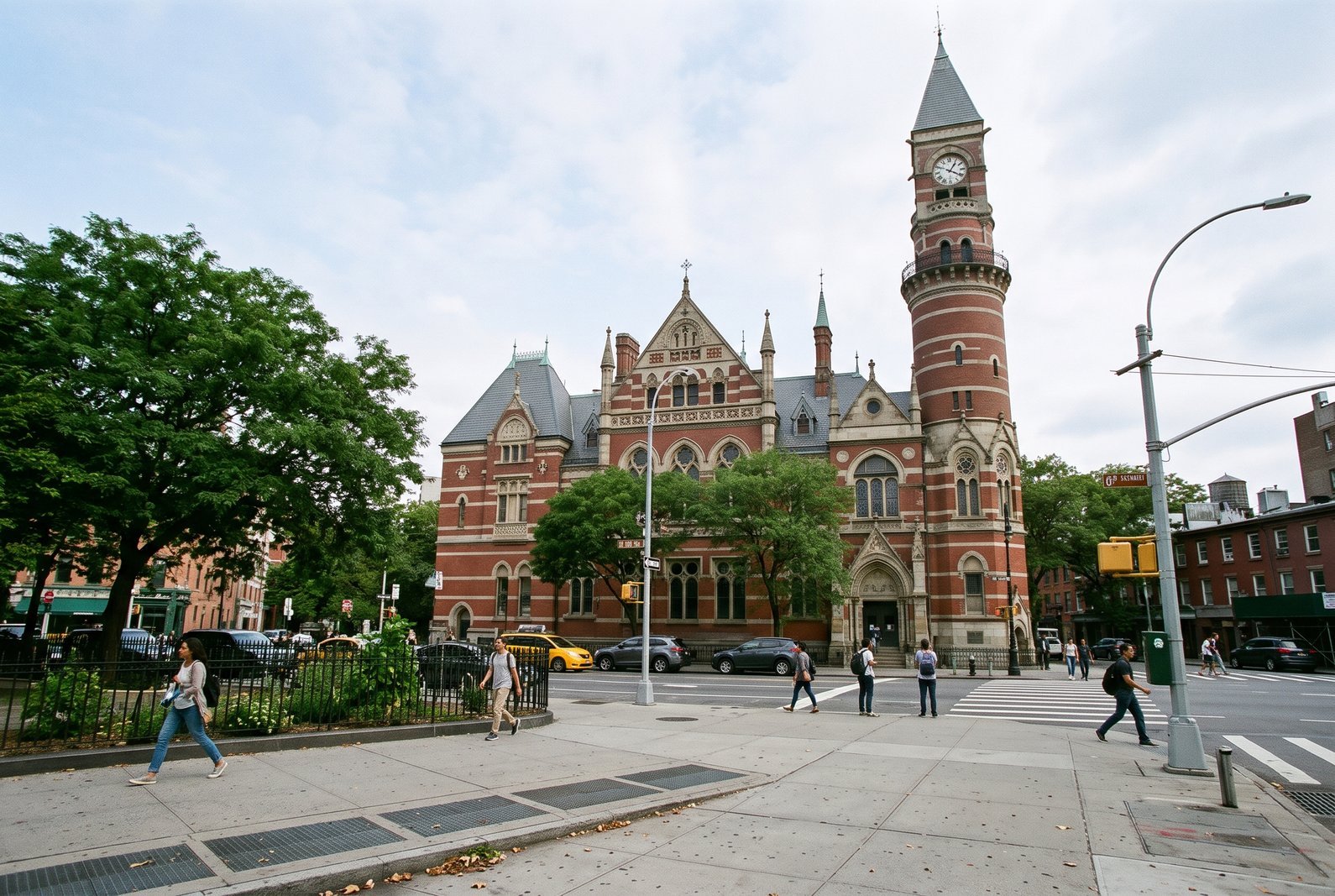
At Sixth Avenue and West 10th Street, Jefferson Market Library announces the walk with a building that looks more like a small Victorian civic monument than a standard neighborhood library. Its clock tower, rich masonry, and pointed Gothic detailing make a striking contrast with the quieter side streets just beyond. The former courthouse is a useful orientation landmark: stand where the building can be appreciated in context, rather than trying to force every architectural detail into one photograph.
Plan Your Visit
Location: 425 Sixth Avenue, Manhattan, NY
Google Maps: View Jefferson Market Library on Google Maps
Official website: New York Public Library
2. Browse Three Lives & Company on West 10th Street
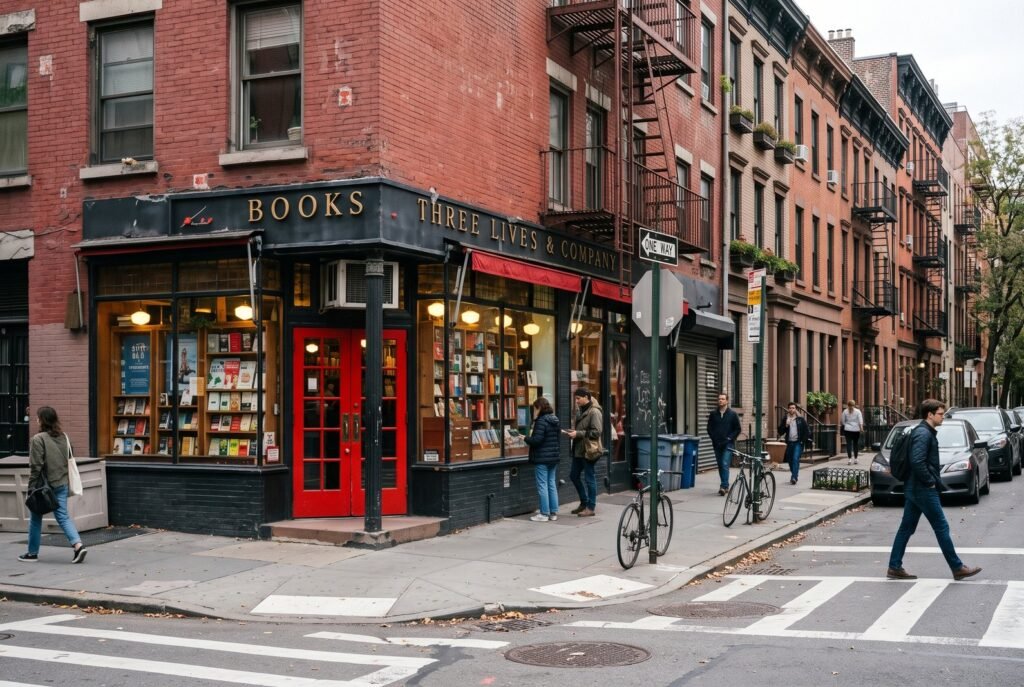
Three Lives & Company, at 154 West 10th Street, is the sort of shop that rewards genuine browsing. It is compact, with a carefully chosen range of books rather than the endless aisles of a large chain. For travelers who like leaving a place with something to read, a neighborhood bookstore is a more personal souvenir stop than another magnet rack.
Take a look at the surrounding block as well: Waverly Place and West 10th Street offer a taste of the neighborhood’s irregular street geometry. The shop is an optional stop, not a mandatory route checkpoint; opening hours can change, and its small interior may be busy. Continue toward Christopher Street and Sheridan Square, using a live map through the short connecting blocks.
Plan Your Visit
Location: 154 West 10th Street, Manhattan, NY
Google Maps: View Three Lives & Company on Google Maps
Official website: Three Lives & Company
3. Stop at Christopher Park and the Stonewall historic landscape
Christopher Park is a small triangular green space with an enormous place in American history. Across from the park stands the Stonewall Inn; the surrounding sidewalks and streets were part of the 1969 uprising that became a turning point in the modern LGBTQ+ rights movement. The National Park Service recognizes the park and surrounding historic landscape as Stonewall National Monument. This deserves more than a quick façade photograph.
Pause to read the interpretation, see the Gay Liberation sculpture in the park, and understand why this ordinary-looking intersection mattered. It is also a pleasant place to sit before turning deeper into the residential neighborhood. Keep the visit respectful: the monument is a lived civic and commemorative space, not simply an Instagram backdrop. The National Park Service provides more background on Christopher Park and its history.

Plan Your Visit
Location: Christopher Street and West 4th Street, Manhattan, NY
Google Maps: View Christopher Park and Stonewall National Monument on Google Maps
Official website: National Park Service — Christopher Park
4. Follow Grove Street for classic West Village character
From the Christopher Street area, walk toward Grove Street and follow it west through the blocks near Bedford Street. Grove is a good answer to anyone searching for the West Village NYC aesthetic: not because each block is flawless, but because the streetscape has the layered texture that photographs rarely capture completely. Brick façades, doorways, small trees, changing rooflines, and everyday city clutter sit side by side.
At the intersection with Bedford Street, slow down and look in more than one direction. The diagonal views and tight corners show why this part of Manhattan feels different from the numbered avenues uptown. If you stop for a picture, stay out of the roadway and leave apartment steps and entrances clear. The joy here is the street itself; there is no need to claim a doorstep as a public photo attraction.

Plan Your Visit
Location: Grove Street at Bedford Street, Manhattan, NY
Google Maps: View Grove Street on Google Maps
5. Discover the unusual houses of Bedford Street
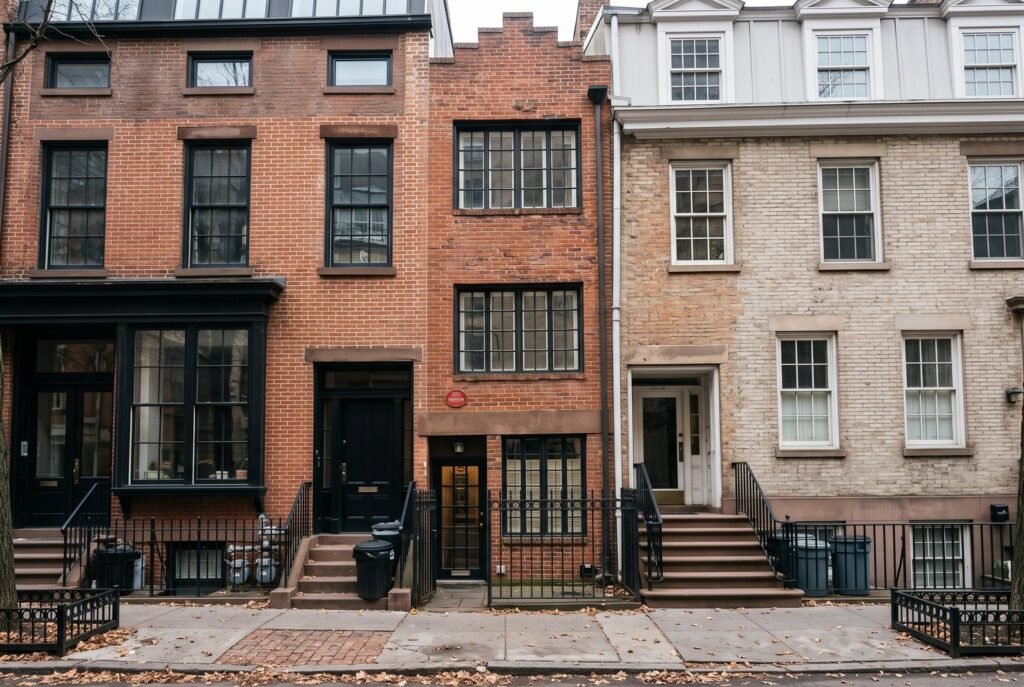
Turn onto Bedford Street and make time for the stretch around Commerce Street. Here, the strikingly narrow house at 75½ Bedford Street sits next to 77 Bedford Street, an early surviving neighborhood house. The skinny façade and old streetscape are a compelling reminder that Greenwich Village developed long before much of modern Manhattan adopted its regular street grid.
Poet Edna St. Vincent Millay lived at 75½ Bedford Street in the 1920s, adding a literary layer to the architectural story. Village Preservation documents both buildings, though published sources vary on some construction details; the visible façades and their relationship to the old block are the reason to visit. Both are private residences. Appreciate them from the public sidewalk and resist photographing into windows.
Plan Your Visit
Location: 75½ and 77 Bedford Street, Manhattan, NY
Google Maps: View Bedford Street historic houses on Google Maps
Official website: Village Preservation
6. Take the bend through Commerce Street
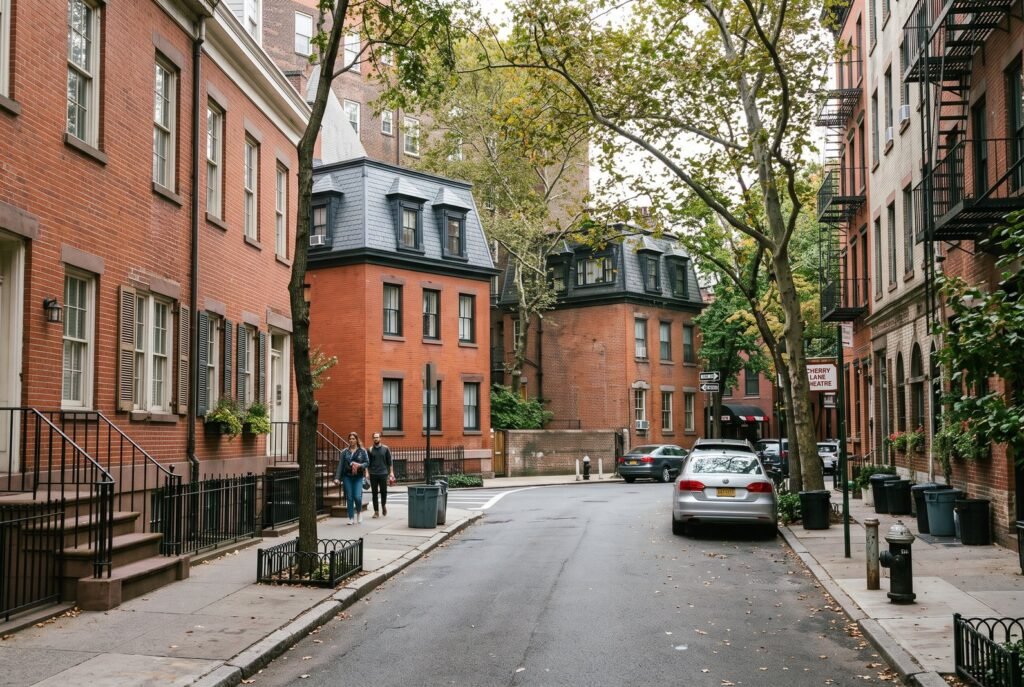
Commerce Street is one of the neighborhood’s most memorable short walks. Instead of following a long, straight canyon, it curves past handsome brick façades and compact residential buildings, with the feeling of discovering a small pocket of the city. The bend matters more than any one doorstep. This is also the area of Cherry Lane Theatre, a long-standing name in downtown performance history; check its current programming independently if you hope to attend something.
Give yourself a few minutes to walk without checking the next destination. Look back as the perspective changes, and notice how the street seems to reveal itself in sections. It is especially atmospheric in softer morning light or under overcast skies, when the brick and stone details remain visible. Commerce is a functioning residential street, so use quiet, unobtrusive photography.
Plan Your Visit
Location: Commerce Street at Bedford Street, Manhattan, NY
Google Maps: View Commerce Street on Google Maps
7. Wander Charles and Perry Streets instead of chasing a single photo spot
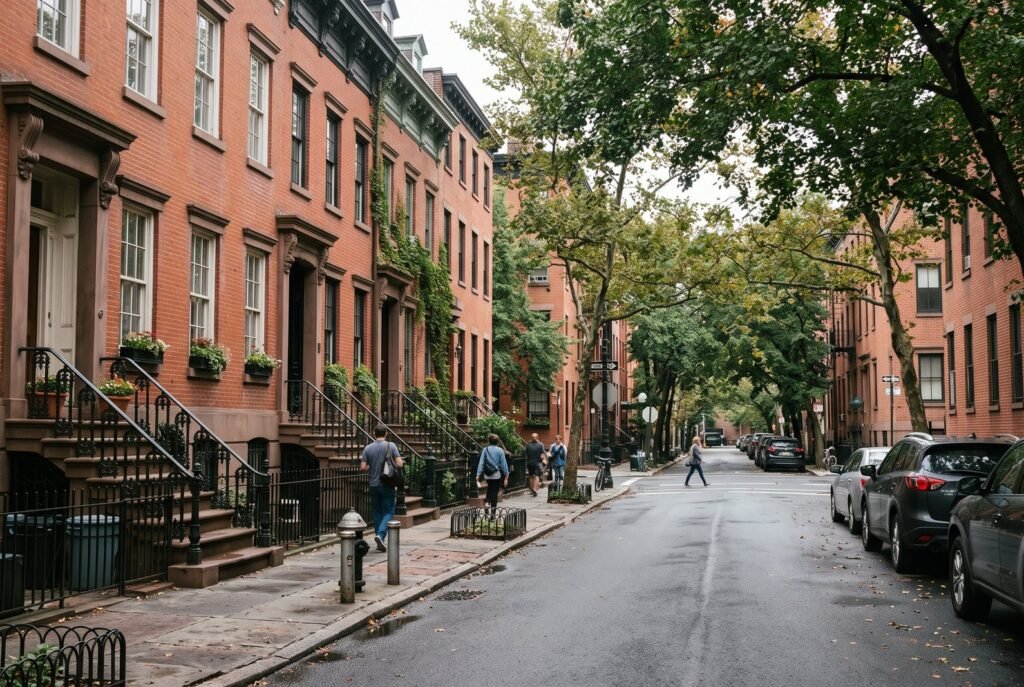
Head north and west through the residential blocks around Charles and Perry Streets. These streets capture an appealing side of West Village life: mature trees, brick row houses, stoops, and storefronts appearing at intervals rather than in a continuous shopping strip. You do not need to find a supposedly secret address to appreciate the setting. The pleasure is in comparing one block with the next.
Perry Street is often associated with a famous television stoop, but the homes here are private property and the area receives plenty of visitors already. A better approach is to enjoy the architecture more broadly, avoid crowding doorways, and keep moving when a block feels residential. If you prefer to be away from the busiest photo clusters, continue along another quiet cross street instead.
For more places where the streets themselves make the photograph, the NYC photo spots guide follows the same street-level approach.
Plan Your Visit
Location: Perry Street near Charles Street, West Village, Manhattan
Google Maps: View Charles and Perry Streets on Google Maps
8. Add a relaxed Bleecker Street shop or snack detour
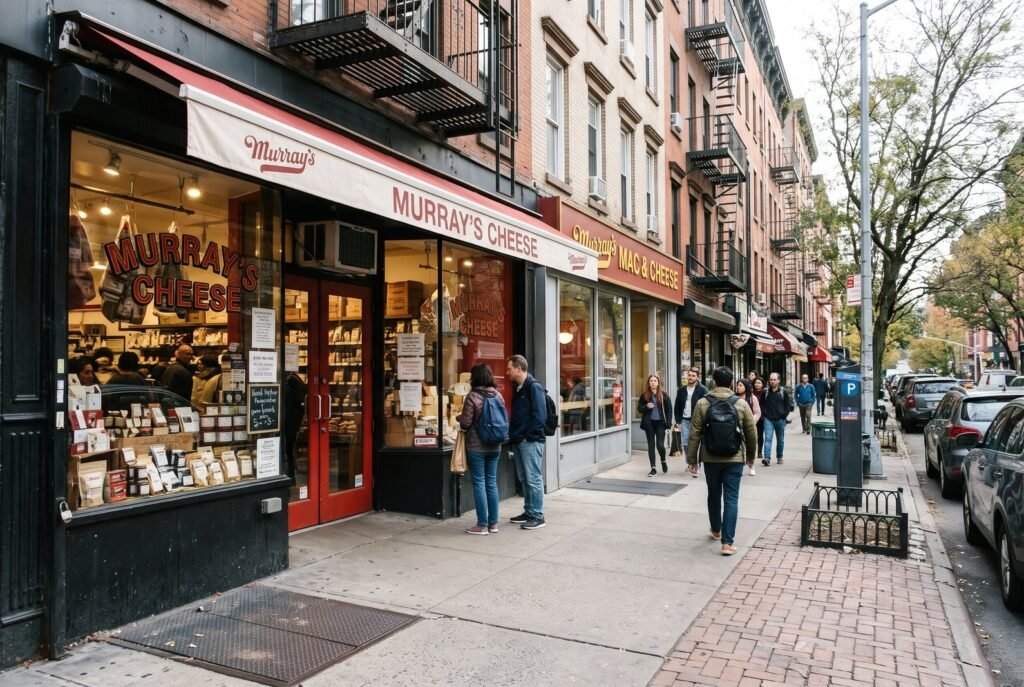
For a break from townhouse blocks, consider looping toward Bleecker Street before continuing west. Murray’s Cheese at 254 Bleecker Street is a longstanding specialty-food stop where browsing the cases can be an experience in itself. The broader Bleecker corridor mixes small boutiques, food shops, and bigger-name retailers, so it is best explored without pretending that every store is independently owned.
If you want something simple, choose a snack or drink based on what is open rather than scheduling a hard-to-get restaurant table around this route. A useful alternative is to save a sit-down meal for after the walk. A café line, shop closure, or change of plans should never derail a neighborhood afternoon. This is an optional eastward detour; skip it for the most direct walk to the waterfront.
Plan Your Visit
Location: 254 Bleecker Street, Manhattan, NY
Google Maps: View Murray’s Cheese / Bleecker Street on Google Maps
Official website: Murray’s Cheese
9. Finish with breathing room at Pier 45 and the Hudson River
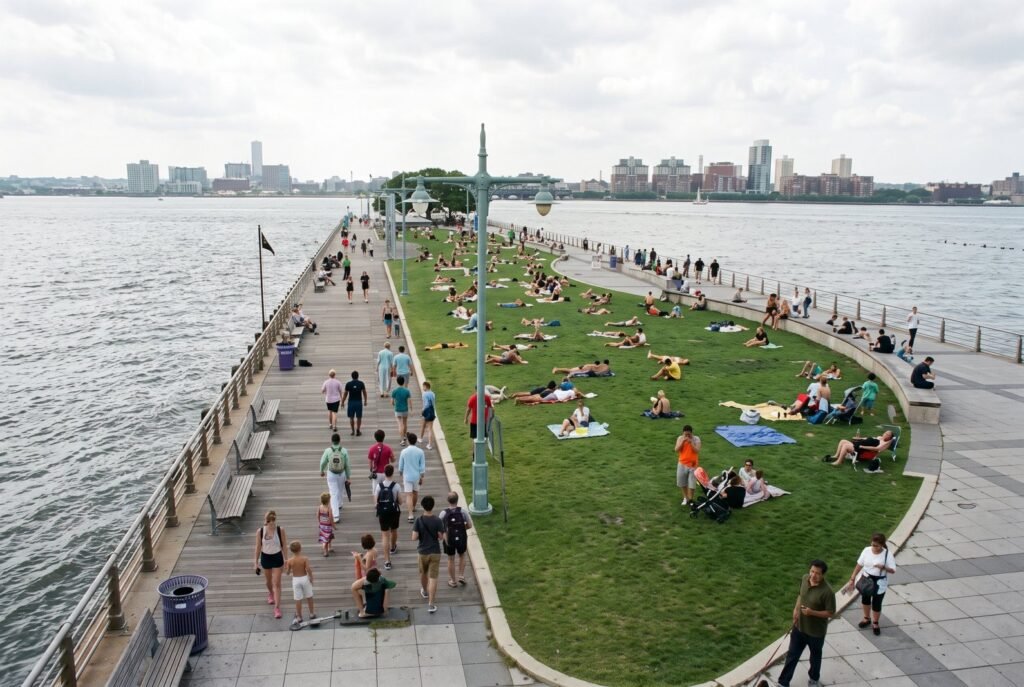
Walk west toward the Christopher Street entrance to Hudson River Park and continue to Pier 45. After an afternoon of close-set buildings and small streets, the open water feels like a deliberate change of pace. The pier has a lawn, seating, and broad river views, which makes it a natural place to sit, sort through photographs, or simply watch the light change. If you plan to continue exploring after sunset, the NYC at Night guide offers another way to shape the evening.
The waterfront finish is most appealing when the weather cooperates, but the pier is not dependent on a perfect sunset. On a cloudy day, the contrast between the quiet river edge and the dense streets behind you can be just as memorable. Current facilities and programming can be checked on Hudson River Park’s Pier 45 page.
Plan Your Visit
Location: Pier 45, Christopher Street, Manhattan, NY
Google Maps: View Pier 45, Hudson River Park on Google Maps
Official website: Hudson River Park — Pier 45
Optional detours if you have more time
If you particularly enjoy historic streets, extend the wander along Bank Street or toward Abingdon Square rather than adding another long-distance attraction. For readers interested in the broader Greenwich Village story, Washington Square Park lies east of this route and works better as a separate beginning or ending than as a backtrack in the middle. The streets around it are livelier and feel distinctly different from the residential West Village.
If you enjoy exploring neighborhoods through their architecture and shops, SoHo offers a different kind of downtown walk; the SoHo neighborhood guide is a natural follow-up.
Practical planning for your West Village walk
How to get there and leave
The West 4th Street–Washington Square subway station is a useful approach for the library starting point, while Christopher Street–Sheridan Square serves the Stonewall and Grove Street part of the walk. At the river end, there is no subway station directly on Pier 45; expect to walk inland to your chosen transit connection or continue along the waterfront. For accessible routes, station elevators, service changes, and the right entrance, consult the MTA’s live trip planner. The beginner-friendly NYC subway guide explains how to choose the correct entrance, platform and direction.
When to go and how to pace it
A weekday morning is appealing for comparatively calm streets and gentle light, though no time guarantees empty sidewalks. Late afternoon can work beautifully for photographs, especially if the waterfront is your final stop. Browse-dependent travelers may prefer starting later, after shops open. Reserve more time than a map suggests if you like bookshops, coffee breaks, or architectural details; this is an intentionally unhurried route.
Walking conditions, accessibility, and neighborhood etiquette
Expect ordinary New York sidewalks, active intersections, and some uneven historic surfaces. Accessible street routes and entrances differ, and a business may not be step-free even when the route to its front door is. Verify individual access information if needed. Restrooms are not assured at every café or shop; Hudson River Park publishes information about Pier 45 facilities, and public-library amenities depend on branch access. Be considerate around homes, building entrances, and memorial sites.
How to fit this walk into a larger New York trip
This route pairs naturally with an evening elsewhere in lower Manhattan, especially if you prefer to keep the afternoon flexible rather than adding another fixed-time attraction.
Final Thoughts
The West Village is at its best when you let the street plan loosen your own plans. Begin with the Gothic library, pause for history at Christopher Park, look carefully at the old houses around Bedford and Commerce, then finish at the river if you have the energy. You will have seen recognizable landmarks, but also something more valuable: the small transitions that make a neighborhood feel distinct. A flexible walk, attentive photography, and a little time to browse will do more for the experience than a crowded checklist.
FAQs
Is West Village NYC worth visiting?
Yes—particularly if you enjoy architecture, independent shops, atmospheric streets, and walking without a rigid schedule. It is a different kind of sightseeing day from major observation decks or museums.
Are West Village and Greenwich Village the same place?
The West Village is generally understood as the western portion of the larger Greenwich Village area. Local usage and informal borders vary, so treat neighborhood edges as approximate rather than official lines.
Where is the prettiest part of the West Village?
Grove Street near Bedford, Commerce Street, and the residential blocks around Charles and Perry Streets offer the classic combination of low-rise architecture and tree-lined sidewalks. The best corner depends on the light, season, and whether you prefer quiet blocks or lively shops.
Can I do the walk without spending money?
Yes. The street views, Christopher Park, and waterfront finish can be enjoyed without paying an admission fee. Shops and cafés are optional, and any indoor venue may have its own access rules.
Where should I start a West Village walking tour?
Jefferson Market Library makes a memorable start for this east-to-west route. If you are arriving on the 1 train or want a shorter walk, start at Christopher Park and continue toward Grove, Bedford, Commerce, and the waterfront instead.