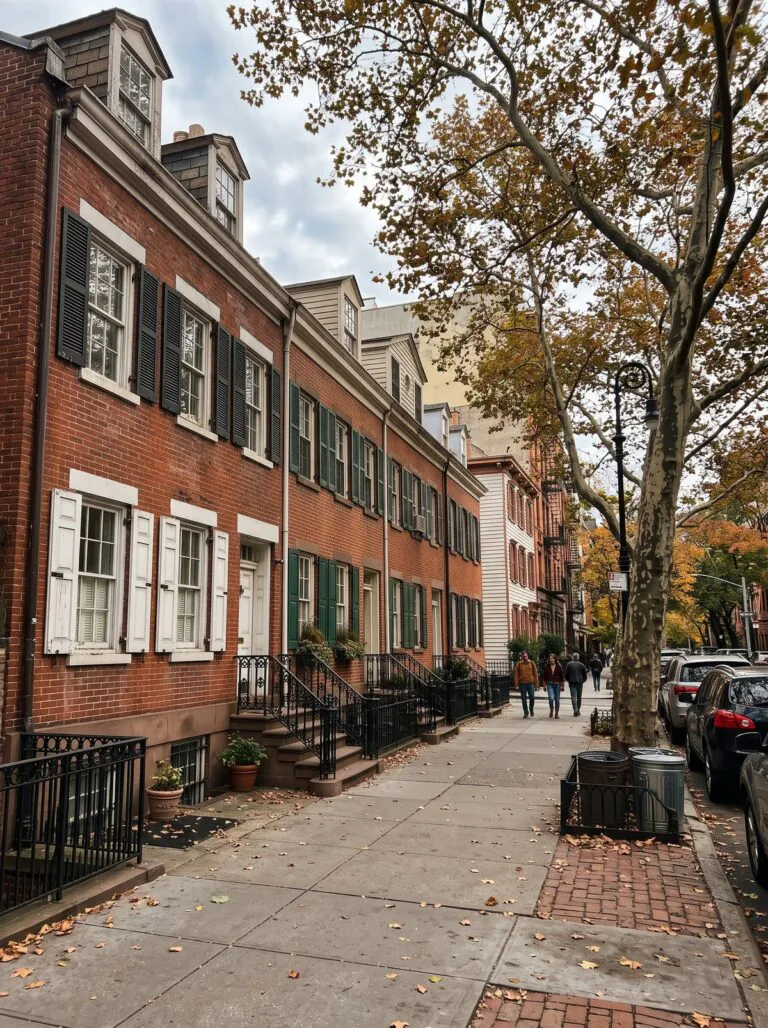
Montmartre Paris Guide: Streets, Views, and Places to Visit
Montmartre Paris is more than the white domes of Sacré-Cœur and the artists gathered around Place du Tertre. The pleasure of this hillside neighborhood comes from how the mood changes between adjoining streets: a broad city panorama, a quiet garden wall, an old village lane, then a lively stretch of cafés and food shops. This walking-focused guide connects those contrasting corners without pretending that every pretty street is undiscovered. Start near the summit, follow the quieter northern edge of the hill, and finish around Abbesses. You can shorten the walk, linger at the museum, or reverse it if you prefer climbing. The route is about exploring thoughtfully, not collecting landmarks as quickly as possible.
Montmartre’s narrow lanes are one expression of the city’s wider visual character; our Paris aesthetic guide explores other streets, gardens, and public spaces worth noticing on foot.
The Montmartre walk at a glance
Start: Sacré-Cœur forecourt (reach the hill from Anvers and the funicular, or approach on foot). Follow: Place du Tertre → Rue Cortot and Musée de Montmartre → Rue des Saules and the vineyard → Rue de l’Abreuvoir and Place Dalida → optional Avenue Junot and Villa Léandre → Rue Lepic and the Moulin de la Galette → Place des Abbesses. Finish: Abbesses Métro, line 12. Allow a relaxed half-day if you enter the museum, sit for coffee, or take the optional western detour. The route has cobblestones, slopes, and intermittent stairs; no entirely step-free route is promised.
Montmartre Walking Route Map
Use the interactive map below to follow this self-guided Montmartre walking route, from the Sacré-Cœur Basilica to Place des Abbesses. The map highlights the main attractions, picturesque streets, and an optional detour through Avenue Junot and Villa Léandre.
Open the map in Google Maps to explore the stops on your phone as you walk. Bear in mind that Montmartre has steep streets, cobblestones, and stairways, so the suggested route may not be suitable for everyone.
1. Begin at Sacré-Cœur for the panorama and a sense of place
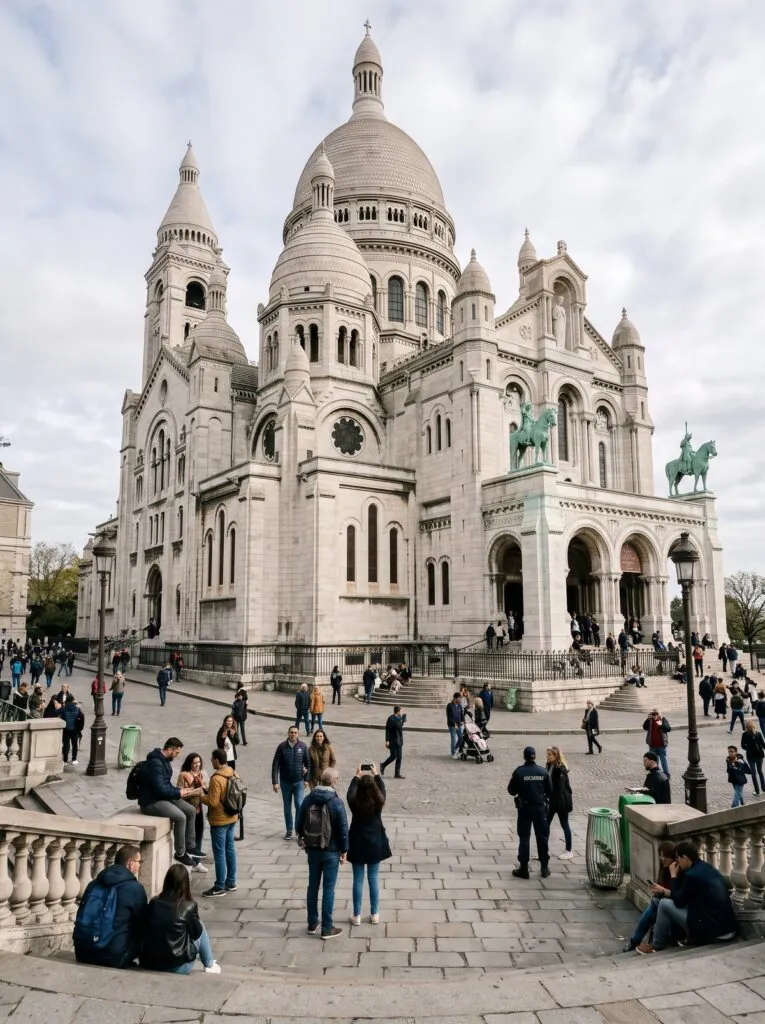
The broad steps and forecourt above Square Louise Michel reveal why the hill dominates so many Paris itineraries. From here, the roofs and avenues spread outward, creating a genuine orientation point before the narrower village streets. The basilica itself has a pale stone exterior and a vast mosaic inside; it is an active place of worship, not merely a viewpoint. Keep voices low and respect any restrictions on photography or access. The summit can become crowded, especially around sunset, so an early start makes the architecture easier to appreciate.
Arriving from the south, Anvers on Métro line 2 is a useful approach; the Montmartre funicular offers a way to bypass the steep staircase beside Square Louise Michel. Verify current tickets and operating details with RATP before traveling. For the basilica, see the Paris tourism office’s official visitor listing: Sacré-Cœur visitor information.
Plan Your Visit
Location: 35 Rue du Chevalier de la Barre, 75018 Paris, France
Google Maps: View Sacré-Cœur Basilica on Google Maps
Official information: Paris tourism — Sacré-Cœur
2. Cross Place du Tertre without making it your whole visit
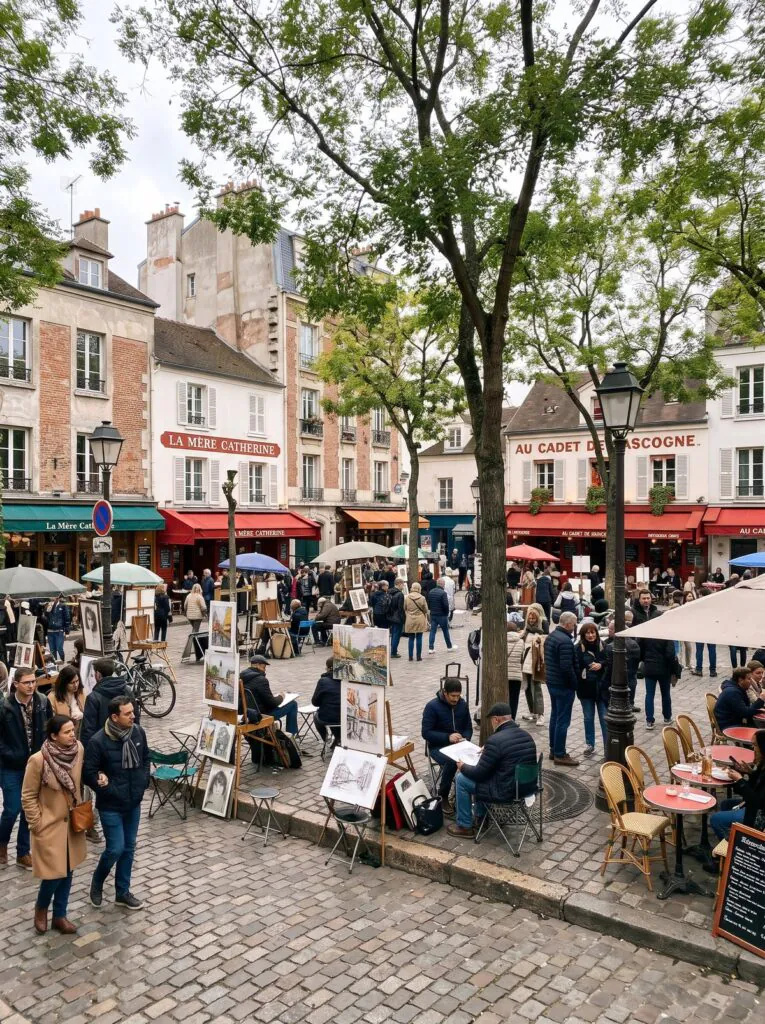
Just west of the basilica, Place du Tertre is the theatrical part of old Montmartre: painters at work, portrait sellers, restaurant terraces, and visitors negotiating a crowded square. It is memorable precisely because its association with artists remains visible, even if the setting can feel commercial. Watch the process, enjoy the activity, and consider a portrait only after confirming the price and terms directly with the artist. If you want a quieter look at the neighborhood, use this as a short stop and keep walking beyond its busiest edges.
Place du Tertre is a public square in the 18th arrondissement, immediately west of the Sacré-Cœur area. The nearby Saint-Pierre de Montmartre church is worth noticing for visitors interested in the hill’s older religious history.
Plan Your Visit
Location: Place du Tertre, 75018 Paris, France
Google Maps: View Place du Tertre on Google Maps
Also nearby: View Saint-Pierre de Montmartre church on Google Maps
3. Step into Rue Cortot and the Musée de Montmartre
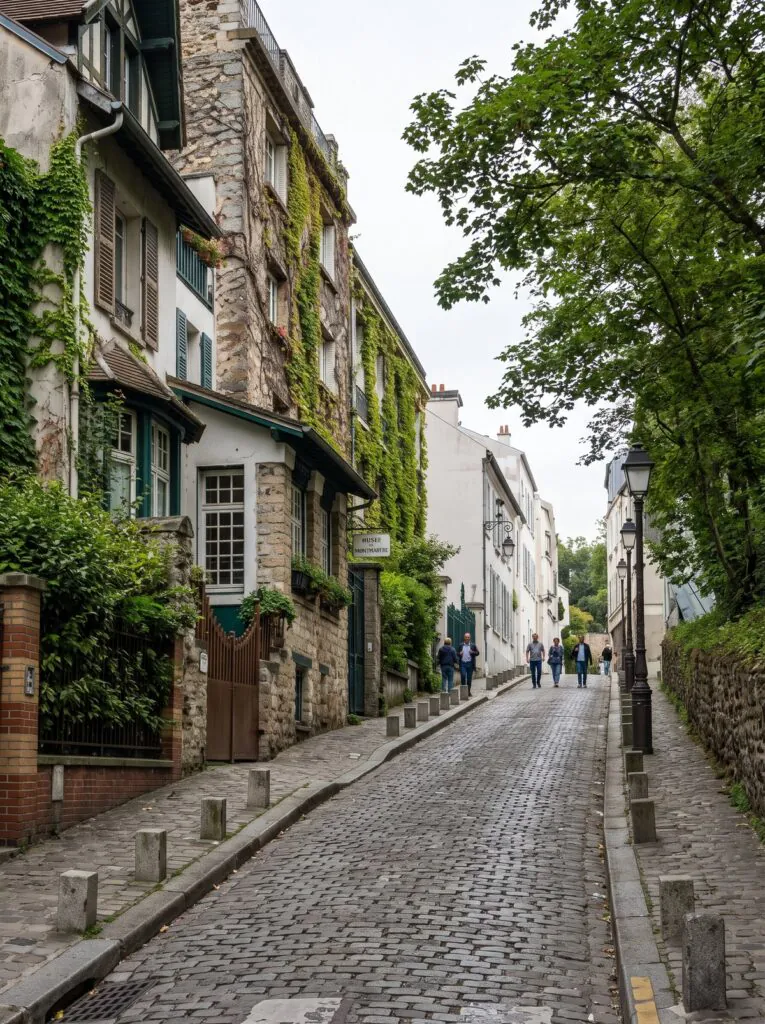
Rue Cortot feels comparatively contained after the main square. At number 12, the Musée de Montmartre tells the story of the area’s artistic life through its historic buildings, collections, and gardens. The former atmosphere of studios and working artists becomes easier to picture here than amid the souvenir shops. The gardens named for Renoir offer a particularly appealing pause on a pleasant day, with a different kind of view from the monument-filled crest.
The museum is a genuine optional paid stop rather than a mandatory box to tick. It suits anyone interested in Suzanne Valadon, Renoir, the neighborhood’s cultural history, or simply a slower afternoon. Museum address: 12 Rue Cortot, 75018 Paris. Official visitor information: Musée de Montmartre visitor information. Check the museum’s current exhibition, tickets, and access notes before you go.
Plan Your Visit
Location: 12 Rue Cortot, 75018 Paris, France
Google Maps: View Musée de Montmartre on Google Maps
Official information: Musée de Montmartre — practical information
4. Find the vineyard and Rue des Saules
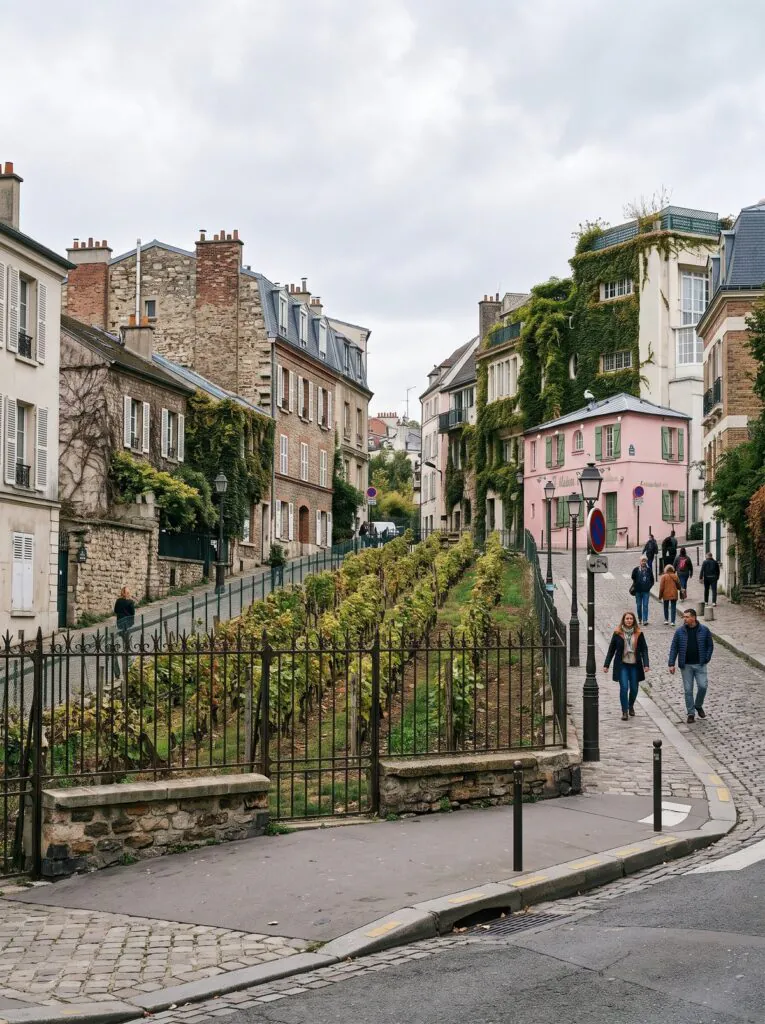
Continuing north toward Rue des Saules brings an unexpected image: vines growing on an urban hillside. Clos Montmartre sits around the junction of Rue des Saules and Rue Saint-Vincent, a reminder that this part of Paris still carries traces of its village and agricultural past. It is not an open vineyard where visitors can roam freely; enjoy the view from the public street, without treating the enclosure as a photo set you can enter.
Nearby, the red-fronted Au Lapin Agile cabaret is a distinctive historical landmark on Rue des Saules. Even without booking a performance, the surrounding streets reward an unhurried look at the contrast between stone boundaries, modest houses, and the dramatic hill. Official neighborhood route: Montmartre neighborhood walking guide.
Plan Your Visit
Location: Rue des Saules and Rue Saint-Vincent, 75018 Paris, France
Google Maps: View Clos Montmartre vineyard on Google Maps
Also nearby: View Au Lapin Agile cabaret on Google Maps
Official information: Paris tourism — Montmartre village walk
5. Follow Rue de l’Abreuvoir toward Place Dalida
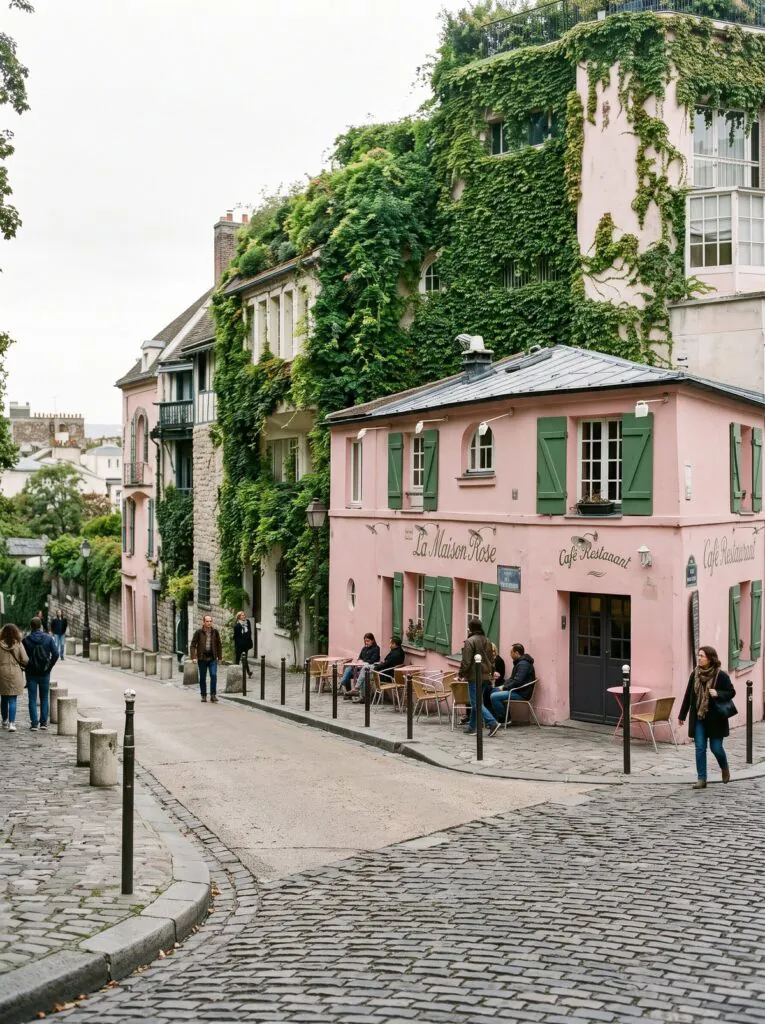
Rue de l’Abreuvoir is one of the best-known photogenic streets on the hill, with a curve that frames old-fashioned façades and a glimpse toward the Sacré-Cœur area. La Maison Rose, at 2 Rue de l’Abreuvoir, adds a recognizable pink corner to the scene. It is a real operating establishment, so treat its terrace and doorway as someone’s workplace, not a free photography studio. If you plan to eat there, verify opening and reservation details on its official channels.
Continue toward Place Dalida, where a bust commemorates the singer who lived nearby on Rue d’Orchampt. The appeal is not a single dramatic landmark but how quickly the streets change scale. Come in the morning for softer light and less foot traffic, while accepting that no hour guarantees an empty street. The official tourism route confirms these nearby points: Montmartre walking route.
Plan Your Visit
Location: Rue de l’Abreuvoir, 75018 Paris, France
Google Maps: View Rue de l’Abreuvoir on Google Maps
Also nearby: View La Maison Rose on Google Maps
Also nearby: View Place Dalida on Google Maps
Official information: Paris tourism — Montmartre walks
6. Take the optional western detour to Avenue Junot and Villa Léandre
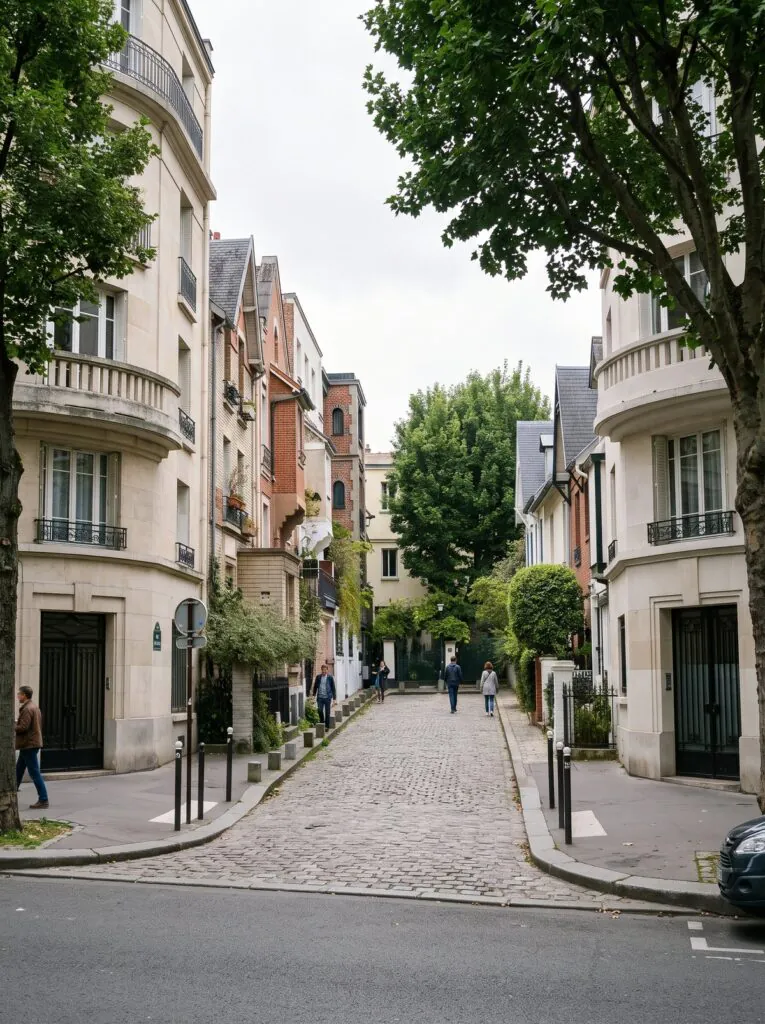
If you have energy for an extra loop, explore the northern-western slope via the quieter streets around Avenue Junot. The broad avenue and its varied private houses feel markedly different from the compact market-square atmosphere. Villa Léandre, a small residential lane off Avenue Junot, has unusual cottage-like brick façades and bay windows. It is lovely to observe from the public way, but it is not a sightseeing attraction with a visitor entrance; keep voices down, avoid blocking residents, and do not enter private property.
This detour adds walking and changes the rhythm of the route, so skip it if you would rather spend longer in the museum or stop for lunch. The Paris tourism office’s western-Montmartre walk identifies Avenue Junot and Villa Léandre as characteristic sights: Montmartre walking route.
Plan Your Visit
Location: Avenue Junot, 75018 Paris, France
Google Maps: View Avenue Junot on Google Maps
Also nearby: View Villa Léandre on Google Maps
7. Descend by the Moulin de la Galette and Rue Lepic
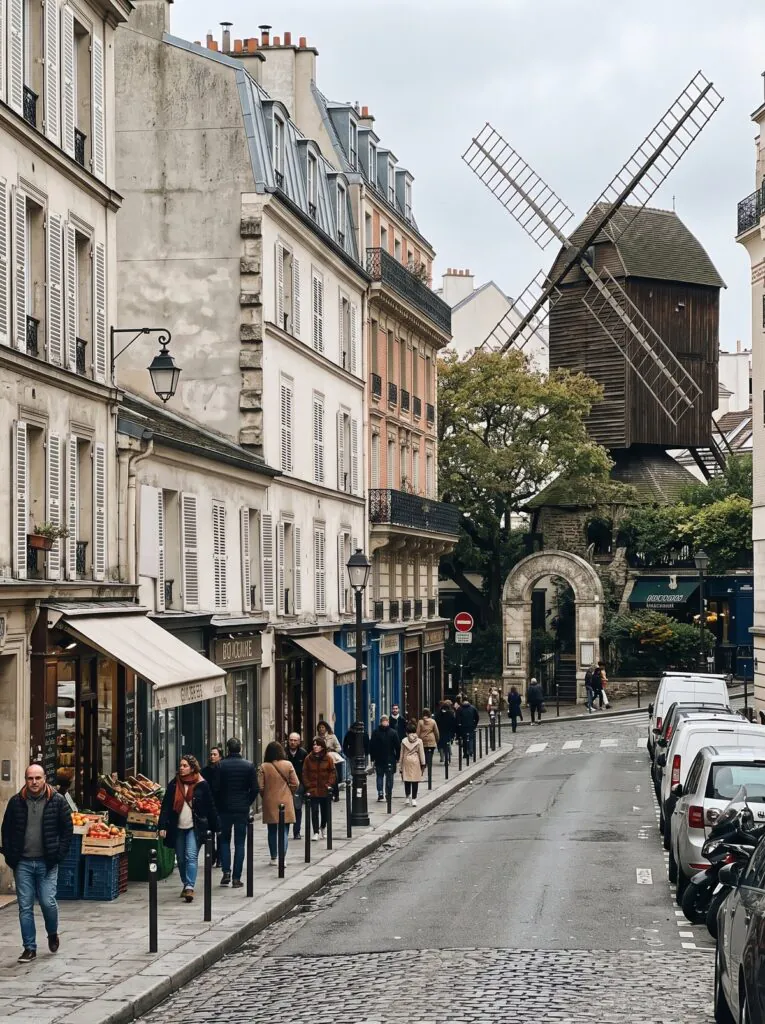
Rue Lepic helps connect the former village to Montmartre’s more everyday shopping streets. Its curved climb is lined with food businesses, cafés, and restaurants, rather than only monuments. Around the upper stretch, look for the Moulin de la Galette, the historic windmill associated with the district’s festive and artistic past. It offers useful context for the painters who made Montmartre famous: the district was a place where people lived, worked, danced, and met, not just a collection of picturesque views.
The official tourism office describes Rue Lepic as a link between the Blanche area and Place du Tertre. On this downhill itinerary, use the upper stretch before turning toward Abbesses; do not feel compelled to descend all the way to Blanche unless you want to add the Moulin Rouge exterior as a separate finish. Street reference: Rue Lepic visitor information.
Plan Your Visit
Location: 83 Rue Lepic, 75018 Paris, France
Google Maps: View Moulin de la Galette on Google Maps
Official information: Paris tourism — Rue Lepic
8. Finish in Abbesses, a lived-in neighborhood center
Place des Abbesses brings the walk back to café tables, shops, and transit. Notice the distinctive Métro entrance and the brick façade of Saint-Jean de Montmartre nearby. Rue des Abbesses is a sensible place for coffee or something to eat after the slopes, and it has more of a neighborhood-shopping feel than the crowded lanes around Place du Tertre. Rather than insisting on a supposedly secret restaurant, look at menus and opening notices on arrival and choose somewhere that suits your budget and appetite.
Square Jehan Rictus, at 14 Place des Abbesses, is the location of the famous “I Love You” Wall. Important: the City of Paris currently states that the wall is inaccessible for safety reasons. Do not build your visit around seeing or photographing it unless the city updates that notice. Official status: Square Jehan Rictus access notice. Abbesses station on Métro line 12 is a natural departure point, though reaching its deep platforms may involve lifts or considerable stairs depending on access conditions.

Plan Your Visit
Location: Place des Abbesses, 75018 Paris, France
Google Maps: View Place des Abbesses on Google Maps
Also nearby: View Square Jehan Rictus on Google Maps
Official information: City of Paris — Square Jehan Rictus access notice
Practical planning for visiting Montmartre Paris
Choose your starting point to match your energy
For a mostly downhill experience, start at the summit using the funicular from the Anvers side, then follow the stops toward Abbesses. For a more traditional uphill arrival, begin at Abbesses and reverse the sequence, saving Sacré-Cœur for the end. Neither option eliminates all slopes. The funicular is operated by RATP; use its current official information for payment and ticket rules: RATP ticket and payment information.
Allow time for actual wandering
A quick walk can cover the central landmarks, but Montmartre improves when you leave room for a museum visit, a coffee break, and unexpected side streets. A half-day is a comfortable editorial suggestion, not a guaranteed travel time. The optional Avenue Junot loop is best treated as an add-on, not something everyone must complete. Keep a map open as you walk: streets curve around the hill, and a picturesque-looking shortcut may turn into a staircase. If you would rather stay in the neighborhood and explore before the busiest hours, our hotels in Paris guide compares Montmartre with other possible bases around the city.
Plan for uneven ground and changing conditions
Wear shoes with traction for cobblestones and damp steps. Public transport access varies by station and entrance, so travelers with reduced mobility should consult RATP accessibility information rather than rely on an assumed step-free route. Weekends and attractive weather tend to concentrate visitors around Sacré-Cœur and Place du Tertre; earlier hours often feel less congested. Museum opening hours, performances, and restaurant schedules can change, so check the relevant official websites before relying on a fixed plan.
What is worth paying for?
The hilltop view and wandering the streets need no attraction ticket. The Musée de Montmartre is a worthwhile paid choice if the artistic history genuinely interests you. A portrait at Place du Tertre, a cabaret performance, or a long terrace meal may be enjoyable splurges, but none is required to understand the neighborhood. This is a good area to spend deliberately: pay for an experience you care about, not simply because it appears on every itinerary.
Final Thoughts on Visiting Montmartre Paris
The most rewarding Montmartre Paris walk is not the one with the largest number of stops. Sacré-Cœur and Place du Tertre give you the famous views and artistic atmosphere, but the quieter streets beyond them reveal more of the neighborhood’s character. Following Rue Cortot toward the museum, the vineyard, Rue de l’Abreuvoir, and the descent to Abbesses helps connect the familiar landmarks with the lived-in parts of the hill.
A half-day is a good starting point if you enjoy walking, though the museum and optional Avenue Junot detour can easily justify more time. Choose the summit-first route if you prefer to do more of the walk downhill, wear comfortable shoes for cobblestones and steps, and check opening or access notices for any place you particularly want to enter. You do not need a paid experience at every stop: a slow coffee break, a view from the public street, or a few minutes observing the architecture can be just as memorable. Let the route guide you without making it so rigid that you miss the small details between stops.
FAQs
Is Montmartre worth visiting if I have only a short time in Paris?
Yes, particularly if you enjoy walking, streetscapes, and views. Focus on Sacré-Cœur, the nearby old village streets, and a descent to Abbesses rather than trying to include every museum and detour.
Is Montmartre very steep?
Parts are steep and have stairs or uneven paving. The funicular helps with the main ascent beside Square Louise Michel, but it does not make the entire neighborhood flat or fully accessible.
Where should I take photos in Montmartre?
For distinct scenes, try the Sacré-Cœur forecourt, the Rue de l’Abreuvoir curve, street-level details around Rue Cortot, and the public views toward Clos Montmartre. Respect residents and businesses, and do not assume the “I Love You” Wall is currently accessible.
Should I visit Montmartre in the morning or evening?
Morning usually gives a calmer experience on popular streets; evening emphasizes the view and café atmosphere. If you want to enter the museum or other attractions, schedule your visit around their official opening information.